
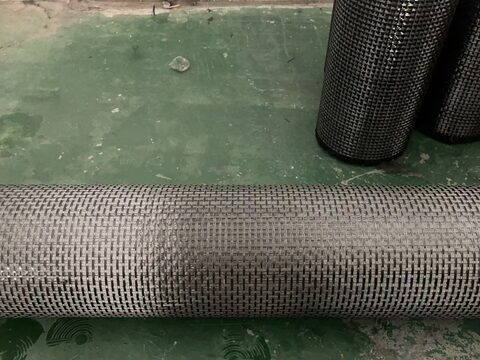
Industrial warehouses face evolving demands. As storage and equipment loads increase, the concrete slabs originally designed for lighter service may no longer comply with current requirements. Traditional strengthening solutions such as slab replacement or section enlargement involve significant downtime, debris, and cost. Carbon fiber reinforced polymer (CFRP) systems offer an efficient, non-destructive alternative to increase floor load capacity without demolition. This article explores the technical considerations and application procedures for upgrading industrial floors with externally bonded CFRP fabric or plates, following principles consistent with guidelines such as ACI 440.2R and fib Bulletin 14.
Understanding the Need for Load Capacity Upgrades
Industrial floors are typically reinforced concrete slabs on grade or suspended slabs. Common reasons for upgrading include: changes in storage rack configuration, installation of heavy machinery, increased forklift traffic, or compliance with updated seismic or live load codes. A structural assessment must first establish the existing slab geometry, reinforcement details, concrete condition, and current load capacity. The target load increase should be defined in terms of additional flexural or shear capacity required. CFRP strengthening is particularly effective for enhancing flexural strength in one-way or two-way slabs, as well as punching shear resistance at column connections in flat slabs.
CFRP Material Properties and System Selection
CFRP systems consist of high-strength carbon fibers embedded in an epoxy resin matrix, applied as either pre-cured plates (lamellae) or wet-layup fabrics. The unidirectional fibers provide tensile strength up to 400 ksi (2,760 MPa) and modulus similar to steel. For floor load capacity, CFRP plates are often preferred for their uniform thickness, ease of installation, and controlled bond line. Fabric is better suited for curved surfaces or two-way reinforcement. The adhesive used is a structural epoxy that must cure fully to achieve the design bond strength. Surface preparation is critical: the concrete substrate must be clean, sound, and free of laitance, with a minimum tensile strength per ASTM C1583 of 200 psi (1.4 MPa) for bond durability.
Design Approach for Strengthening
The design of CFRP strengthening for floor slabs follows a strain-compatible, limit-state approach. First, the existing slab's capacity is calculated using the as-built reinforcement and concrete properties. The required additional tensile force is determined from the difference between the demand and existing capacity. CFRP area is then sized to provide that force, limited by the ultimate strain of the CFRP (typically 0.007 to 0.012 in/in) and the debonding strain (about 0.005 in/in per ACI 440.2R). Anchorage is often needed at CFRP ends, especially near slab edges, to prevent premature peeling. For punching shear, CFRP strips or sheets can be applied radially around columns to increase slab shear capacity. Fire resistance should be considered per local building codes; protective coatings or fire-rated insulation may be required.
Installation Procedure
The installation process begins with surface preparation: shot blasting or grinding to achieve an open-pore profile, followed by dust removal. For wet-layup systems, primer is applied to seal the concrete, then epoxy resin is spread, and fiber fabric is placed and saturated. For plates, a thin layer of epoxy paste is applied to the concrete, and the plate is pressed into place using rollers. Curing at 60°F to 90°F (15° to 32°C) is typical; lower temperatures require slower-curing epoxy. Quality control includes pull-off adhesion tests (minimum 200 psi) and visual inspection for voids. The work can be phased to minimize warehouse downtime, often completing critical areas within a few days.
Advantages and Limitations
CFRP strengthening offers minimal added thickness (typically less than 1/8 inch), preserving floor clearances. It adds negligible dead load and does not require heavy equipment. The system is corrosion-resistant and durable under normal warehouse conditions. However, it is sensitive to elevated temperatures; epoxy softens above about 150°F (65°C). The cost per square foot varies but is generally comparable to other strengthening methods when downtime savings are included. The lifespan of CFRP in interior environments is expected to exceed 50 years under proper application.
Quality Assurance and Long-Term Performance
After installation, a proof load test may be conducted at 50–75% of the target load to verify performance. Monitoring can include strain gauges or periodic visual checks for delamination. Standard specifications require that all epoxy materials be stored at controlled temperatures and applied within the pot life. The engineer should approve the CFRP system's certified tensile properties per ASTM D3039. Properly installed CFRP strengthening reliably increases floor load capacity, enabling warehouses to adapt to higher demands without structural replacement.
In conclusion, CFRP strengthening provides a technically sound, cost-effective method for upgrading industrial floor load capacities. By following established design and installation standards, facility owners can achieve significant load increases with minimal disruption, ensuring warehouse operations remain efficient and code-compliant for decades.