
概要
- 強度と剛性: FidStrongのガラス繊維鉄筋は引張試験で950 MPaを記録し—ACI 440.1R-15が鋼に定める483–690 MPaを上回る—が、弾性係数はわずか47 GPaで鋼の200 GPaに及ばないため、通常は強度ではなくたわみが支配的となる。
- 本当に切り替える理由は腐食対策: GFRPは、海洋環境、融雪剤、化学薬品への曝露下で鋼を破壊する電気化学的腐食に対して無縁である。
- トレードオフ: GFRPは脆性破壊に至るまで線形弾性を保ち、現場での曲げ加工ができず、より大きな断面と、最小鉄筋量で~1.64×(鋼比)が必要となる—これは現在、義務規格であるACI 440.11-22で規定されている。
荷重ではなく腐食が構造物の耐用年数を制約する場合はGFRP鉄筋を、剛性・延性・コストが優先される穏やかな環境では鋼鉄筋を選ぶ。実務上の判断の大半は、この一文で決着がつく。本ガイドの以降の内容はこの判断を数値で裏付けるものであり、すべての数値はACI 440.1R-15、またはFidStrongの試験済みバーデータに基づいており、創作した数値は一切ない。
GFRP鉄筋は実際に鋼より強いのか?
生の引張強度で言えば、答えはイエスである—だが、強度が設計を決定づける物性であることは稀だ。FidStrongのガラス繊維鉄筋(異形棒のFSGRと丸棒のFSGS)はASTM D7205に基づく試験で950 MPaを記録するのに対し、ACI 440.1R-15の表4.2.1では普通鋼棒を483–690 MPaとしている。
問題は剛性だ。GFRPの弾性係数は約47 GPa—鋼の200 GPaのおよそ4分の1にすぎない。したがって同じ荷重下では、GFRP補強部材は鋼補強部材よりはるかに大きくたわみ、ひび割れも大きくなるため、断面を支配するのは終局強度ではなく使用性の限界となる。またGFRPは、突然の脆性破断に至るまで一貫して線形弾性であり、降伏棚も破壊前の延性的な警告も存在しない。この点が、以下で述べる設計思想全体を作り変えている。
| 特性 | 鋼鉄筋 | GFRP鉄筋(FSGR / FSGS) |
|---|---|---|
| 引張強度 | 483–690 MPa | 950 MPa |
| 弾性係数 | 200 GPa | 47 GPa(≈¼) |
| 破壊モード | 延性降伏、伸び6–12% | 脆性、伸び~2.1%、降伏なし |
| 密度 | 7.90 g/cm³ | 2.10 g/cm³(重量≈¼) |
| 熱膨張係数(長手方向) | 11.7 ×10⁻⁶/°C | 6.0–10.0 ×10⁻⁶/°C |
| 電気化学的腐食 | 腐食する(塩化物、中性化) | 影響を受けない |
| 現場での曲げ加工 | 可能 | 不可—工場成形のみ |
鋼および比較用FRPの数値範囲:ACI 440.1R-15 表4.1.1、4.1.2、4.2.1。GFRPの数値:FidStrong FSGR/FSGS製品データ(ASTM D7205 / D7957)。
GFRP鉄筋はなぜ腐食しないのか—そしてその落とし穴とは?
GFRPは電気化学的に腐食しない—これが最大の利点であるが、“腐食しない”という表現は単純化しすぎており、正しく理解しておく価値がある。コンクリートに埋設された鋼は、塩化物(海水、融雪剤)や中性化によって保護皮膜が破壊されると錆び始め、膨張した錆がかぶりコンクリートにひび割れと剥離を生じさせる。GFRPには酸化する金属が存在しないため、そもそもこのメカニズム自体が起こり得ない。
ただし注意点がある。ACI 440.1R-15 §5.2.1は、高pHの間隙水(pH 11.5–13)にさらされた裸のガラス繊維は、強度の最大75%を失う可能性があると指摘している。実使用下でアルカリ攻撃から繊維を守っているのは、FidStrong製バーではビニルエステルである樹脂マトリックスである。GFRPの環境低減係数CEが炭素繊維より厳しい0.7–0.8(ACI 440.1R-15 表6.2)に設定されているのはこのためだ。複合材料が水分、アルカリ性、紫外線の下でどのように劣化するかについては、FRP補強材の耐久性に関するガイドを参照されたい。
GFRP鉄筋は設計をどう変えるのか?
より大きな断面と、より多くの鉄筋本数が必要になると考えてよい。GFRPの低い剛性により、設計は強度支配型からたわみ支配型へと移行する。FRPの脆性破断は前兆を与えないため、設計者は意図的に過補強を行い、破壊がコンクリートの圧壊によって支配されるようにする—f′c = 34.5 MPaにおけるバランス鉄筋比は、GFRPでわずか0.0078であるのに対し、鋼では0.0335である(ACI 440.1R-15 表7.2.1)。
GFRPを指定するすべての設計者にとって、これは二つの帰結をもたらす。引張支配断面の強度低減係数はφ = 0.55であり(§7.2.3)—これは鋼の優先順位とは逆である—、また最小部材厚は増加し(例えば単純支持の一方向スラブでℓ/13、表7.3.2.1)、最小鉄筋量は鋼の値の約1.64×となる(§7.2.4)。これらの特性強度とCE係数を正しく読み取ることが重要であり、FRP技術データシートの読み方に関する解説はバーにもそのまま当てはまる。
どのような場合に、代わりに鋼—あるいはCFRP鉄筋—を選ぶべきか?
環境が穏やかで、剛性や延性が設計を左右する場合は鋼のままでよい。FRPの耐食性が必要だが、GFRPの柔軟性(たわみやすさ)を許容できない場合はCFRPへ格上げする。乾燥した、あるいは十分に保護されたコンクリート内では、弾性係数(200 GPa)、延性破壊による警告、現場での曲げ加工性、トン当たりコストのいずれにおいても鋼が優れる。
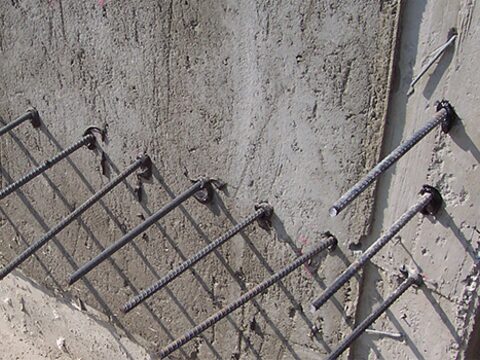
腐食により鋼が使えず、かつたわみ制限が厳しい場合には、炭素繊維(CFRP)鉄筋がガラス繊維よりはるかに高い弾性係数を持ちながら、非腐食性・非磁性という利点を保持する。いずれのバーも、エポキシまたはビニルエステルの鉄筋アンカリングシステムで既存コンクリートにダウエル接合できる—その接合部にも、ケミカルアンカー接着剤選定ガイドで解説した樹脂化学的なトレードオフが同様に当てはまる。
GFRP鉄筋は規格認定されているか?
されている—ACI 440.11-22の制定により、指針(ガイド)から義務規格へと位置づけが変わった。ACI CODE-440.11-22は、GFRP補強コンクリートに関するACI初の規格文言による基準であり、技術者が既に使い慣れているACI 318の章立てに整合するよう構成され、それまで指針にとどまっていたACI 440.1R-15の位置づけに取って代わるものである。
欧州では、prEN 1992-1-1 附属書JAがGFRPの部分安全係数γFRP = 1.50、および100年特性引張強度の最小値fftk,100a ≥ 300 MPaを定めている。米国と欧州のFRP規格が思想面でどう異なるかについては、ACI 440とfib Bulletin 14の比較を参照されたい。
よくある質問
GFRP鉄筋は鋼鉄筋と同じくらい強いのか?
引張強度で言えば、そうである。FidStrongのGFRP鉄筋は試験で950 MPa(ASTM D7205/D7957)を記録し、ACI 440.1R-15が鋼に定める483–690 MPaの範囲を上回る。しかしGFRPの弾性係数は47 GPaにすぎず、鋼の200 GPa(表4.2.1)には及ばないため、通常は強度ではなくたわみとひび割れ幅が設計を支配する。
GFRP鉄筋は鋼のように現場で曲げ加工できるか?
できない。GFRPは線形弾性の複合材であり、現場で曲げると繊維が破断し、設計強度が無効になる。ACI 440.5-08は工場での事前成形による曲げ加工を要求しており、prEN 1992-1-1 附属書JAは現場での曲げ加工を明確に禁止し、最小曲げ直径を4Φ(直径16 mm以下のバー)および7Φ(16 mmを超えるバー)と定めている。
GFRP鉄筋は本当に一切腐食しないのか?
埋設補強材としては、塩化物、中性化、融雪剤といった、鋼を攻撃する電気化学的腐食に対して無縁である。ただし一点注意が必要だ。ACI 440.1R-15 §5.2.1は、裸のガラス繊維は高pHの間隙水中で強度の最大75%を失う可能性があると指摘しており、これは繊維を守っているのが樹脂マトリックスであって、ガラス自体が化学的に完全な耐性を持つわけではないことを意味する。
GFRPは鋼に比べ、コンクリート断面をどれだけ大きくする必要があるか?
より大きくする必要がある。GFRPの弾性係数は鋼のおよそ4分の1であるため、ACI 440.1R-15は、たわみとひび割れ幅を制御するために、より大きな最小部材厚(例えば単純支持の一方向スラブでℓ/13、表7.3.2.1)と、鋼相当値の約1.64×の最小鉄筋量(§7.2.4)を要求している。
GFRP鉄筋を対象とする義務規格はすでに存在するか?
存在する。ACI CODE-440.11-22は、GFRP補強コンクリートに関するACI初の義務的かつ規格文言による建築基準であり、ACI 318と章立てが整合している—これは、それ以前の指針にとどまっていたACI 440.1R-15設計ガイドを超える、コンプライアンス上の大きな節目である。
GFRP鉄筋が鋼より最も理にかなうのはどのような場面か?
生の強度ではなく腐食が耐用年数を制約する場面であればどこでも当てはまる。海洋の桟橋や護岸、融雪剤にさらされる橋梁床版、化学プラントや排水処理施設、そしてMRI室、変電所、レーダー基礎など、GFRPの非導電性・非磁性という特性も同時に求められる電磁的に敏感な構造物などである。
FidStrongは、ISO 9001、14001、45001の品質マネジメントシステムのもとでASTM D7205/D7957に基づき試験されたFSGRおよびFSGSガラス繊維鉄筋を製造しており、上記で言及したエポキシおよびビニルエステルのアンカリング接着剤も供給している。本文中で引用した設計値はACI 440.1R-15、ACI 440.11-22、およびprEN 1992-1-1 附属書JAに基づくものであり、プロジェクト固有の数値については、適用される規格および製品データシートで確認すること。