
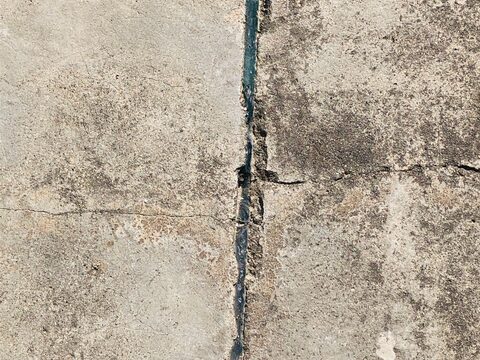
When a major earthquake hits an existing concrete frame, the material question arrives far too early. Engineers are asked which carbon fabric to order before anyone has established whether the damaged column is still a structure that can be strengthened at all. Externally bonded CFRP is a powerful tool for seismic deficiencies, but it is a bonded system: it works only when the concrete underneath it still behaves as concrete, and only when the deficiency it is asked to fix is one that confinement or shear reinforcement can actually address.
At a glance
- Assessment comes before material selection. ACI 440.2R Sec. 13.1 does not define its own seismic evaluation — it sits on top of ASCE/SEI 41 and ACI 369R. No evaluation, no design basis.
- CFRP fixes brittle mechanisms, not bad structures. CNR-DT 200 §4.7 is explicit: FRP can remove shear failure, lap-splice slip, bar buckling and joint failure, but it cannot remove irregularity in stiffness or strength.
- Moving cracks disqualify injection. Structural epoxy injection applies to dormant cracks only; injecting a live crack simply relocates it.
- The substrate must still pass. Pull-off strength of the prepared surface must reach ≥ 1.5 MPa, and corners need a ≥ 20 mm radius before any wrap is applied.
What has to be assessed before any CFRP repair is designed?
The seismic evaluation has to exist first, and it does not come from the FRP code. ACI 440.2R Chapter 13 explicitly builds on the ASCE/SEI 41 and ACI 369R assessment framework (Sec. 13.1) — the FRP standard tells you how to design a jacket, not whether the building deserves one. A retrofit designed without that evaluation has no defined performance objective, so there is no way to demonstrate that the finished work achieves anything.
Diagnosis of cause is the second prerequisite. A structural crack must be traced to its origin before it is filled: if the crack came from overload, insufficient reinforcement or foundation movement, injecting it treats the symptom while the mechanism continues. In post-earthquake work this matters more than usual, because damage from the event and pre-existing damage from settlement or corrosion frequently appear on the same member and look similar to the eye.
Capacity design is the third prerequisite, and it governs the whole of ACI 440.2R Ch. 13: strong column–weak beam, shear capacity above flexural capacity. FRP is applied to move a member's failure mode toward ductile yielding, which means the designer must know which mechanism currently governs before deciding where the fabric goes.
Which earthquake damage can CFRP actually fix?
CFRP addresses brittle failure mechanisms, and ACI 440.2R Ch. 13 names four of them. Insufficient confinement is treated by circumferential column wrapping; brittle shear failure at beam–column joints is treated by FRP in the joint region, which Sec. 13.6 requires in both directions with anchorage validated by testing; longitudinal bar buckling and lap-splice failure are treated by clamping the plastic hinge zone and confining the splice (Sec. 13.3.3–13.3.4); and shear deficiency in stress-reversal regions is treated by complete circumferential wrapping (Sec. 13.5.2).
What CFRP cannot do is stated just as plainly in the European code. CNR-DT 200 §4.7 confirms that FRP removes brittle mechanisms — shear, lap-splice slip, bar buckling, joint failure — but that FRP cannot remove irregularity in structural stiffness or strength. A soft storey remains a soft storey after wrapping. This is the single most useful sentence to have on hand when a building owner asks whether carbon fibre can "fix the building" after an earthquake: it fixes members, not configurations.
| Deficiency observed after the event | CFRP applicable? | Governing clause |
|---|---|---|
| Insufficient column confinement / low ductility | Yes — circumferential wrap | ACI 440.2R Ch. 12 + Sec. 13.3 |
| Brittle shear failure at beam–column joint | Yes — both directions, anchorage proven by test | ACI 440.2R Sec. 13.6 |
| Longitudinal bar buckling, lap-splice failure | Yes — clamp hinge zone, confine splice | ACI 440.2R Sec. 13.3.3–13.3.4 |
| Shear deficiency in stress-reversal region | Yes — complete circumferential wrap | ACI 440.2R Sec. 13.5.2 |
| Stiffness or strength irregularity (soft storey, torsion) | No | CNR-DT 200 §4.7 |
| Live / still-moving cracks | No — flexible sealing, not rigid injection | Injection resin scope |
One detail specific to seismic work is worth knowing because it makes the design less conservative, not more: ACI 440.2R Sec. 13.2 notes that the creep-rupture and fatigue stress limits of Table 10.2.9 generally do not apply to seismic strengthening, because the FRP does not carry sustained load unless it has been prestressed. The sustained-stress cap that governs everyday flexural design is not the binding constraint here.
Are the cracks still moving?
Crack movement decides whether injection is a repair or a waste of resin. Structural epoxy injection — the step that restores load transfer across a cracked section — applies to dormant cracks only. A crack that is still opening and closing under thermal cycling, load reversal or differential settlement must be treated as a movement joint with a flexible sealing system; injecting it rigidly will simply cause the concrete to crack again alongside the repair.
Telling a dormant crack from a live one is unusually hard in the weeks after an earthquake, which is exactly when the decision is being taken. Aftershocks are still redistributing forces, and a member's crack pattern may not be stable yet. Monitoring the crack before committing to a rigid repair is not a delay tactic — it is the difference between a repair that holds and one that reopens.
Where cracks are dormant, low-viscosity structural crack injection epoxy restores continuity across the crack faces. Bond to dry concrete reaches 2.5 MPa and to damp concrete 1.8 MPa, both failing in the concrete rather than at the bond line (ASTM C882) — the repaired interface is stronger than the parent material. Mixed viscosity of ≤ 300 mPa·s allows pressure injection into cracks from 0.05 mm, and gravity filling from 0.1 mm. Linear shrinkage of 0.3 % means the cured resin does not pull away and leave a new leakage path.
Does the damaged concrete still qualify as a substrate?
An externally bonded system is only as good as the surface it is bonded to, and earthquake damage attacks exactly that surface. The prepared substrate must reach a pull-off tensile strength of ≥ 1.5 MPa; laitance and loose material must be ground away first. On a member with spalled cover, crushed concrete at the hinge zone or exposed corroded reinforcement, the sound material may sit well below the original surface, and the section has to be rebuilt before it can be wrapped.
Geometry is the second gate, and it is stricter for seismic work than for plain axial strengthening. ACI 440.2R Sec. 13.3.1 does not recommend confinement for non-circular sections with an aspect ratio h/b > 1.5 or a maximum side dimension greater than 900 mm — noticeably more conservative than the h/b ≤ 2.0 permitted for pure axial confinement in Sec. 12.1.2. CNR-DT 200 §4.5.2.1.2 sets a comparable bar, disallowing confinement where b/h > 2 or the maximum side reaches 900 mm. Sections beyond those limits must be reshaped toward circular or elliptical, or supplemented with FRP anchors.
Corner radius is the detail most often lost on site. Sharp arrises must be rounded to R ≥ 20 mm before wrapping, a requirement on which ACI and CNR agree, because a sharp corner both concentrates stress in the fabric and reduces the confinement effectiveness factor the design relies on. Full treatment of the wrapping sequence is covered in our guide to surface preparation for CFRP installation.
What is the correct repair sequence?
Sequence matters because each step depends on the previous one having cured and passed inspection. The order below follows the wet lay-up practice used for confinement work and holds for post-earthquake repair, with the difference that steps 1 and 2 carry far more weight than they do on an undamaged structure.
- Evaluate the structure to ASCE/SEI 41 and ACI 369R and establish the performance objective before any material decision (ACI 440.2R Sec. 13.1).
- Confirm that cracks are dormant, then inject them with low-viscosity structural epoxy — ports at 200–300 mm spacing, crack sealed and ports bedded first. Rebuild spalled or crushed sections and treat exposed corroded reinforcement.
- Prepare the surface: grind off laitance to expose sound concrete, verify pull-off strength ≥ 1.5 MPa, and round all corners to R ≥ 20 mm.
- Prime the prepared substrate, then saturate the fabric with impregnating epoxy and wrap circumferentially with an overlap of at least 100 mm, applying multiple layers wet-on-wet.
- Anchor terminations and joint regions. Unanchored joint FRP is treated as ineffective under CNR-DT 200 §4.7.2.1.4, and ACI 440.2R Sec. 13.6 requires joint anchorage validated by testing.
- Cure and protect: at least 7 days at 20 °C for full cure, and never leave an ambient-cured FRP system exposed to UV — a protective topcoat is mandatory outdoors.
What design values govern the confinement itself?
Confinement design is capped by strain, not by fabric strength, and the caps are lower than newcomers expect. The FRP strain efficiency factor for circular sections is Kε = 0.55, derived from 251 test results (Lam & Teng 2003a; ACI 440.2R Sec. 12.1.3) — the fabric delivers roughly 55 % of its rupture strain in service. For seismic confinement the ultimate confined strain is limited to εccu ≤ 0.01 (Eq. 13.3.2e), with a strength reduction factor ψf = 0.95 for confinement (Sec. 12.1). CNR-DT 200 caps the effective confinement design strain at 0.004 (Eq. 4.37).
Shear strengthening is capped the same way and for a physical reason: the effective FRP strain is limited to εfe = 0.004 ≤ 0.75εfu (ACI 440.2R Eq. 11.4.1.1) to preserve aggregate interlock in the concrete. Allow more strain and the crack opens far enough that the concrete stops contributing shear. CNR-DT 200 limits beam–column joint FRP to a maximum tensile strain of 4‰ and circular-section shear strain to 5×10⁻³ (§4.7.2.1.4, Eq. 4.24).
The strain caps above mean the practical design lever in CFRP confinement is layer count and section geometry, not headline tensile strength. The step-by-step arithmetic, including the shape factor for rectangular sections, is worked through with a numerical example in our guide to calculating carbon fibre layers for column confinement; the broader menu of seismic measures is covered in seismic retrofit with carbon fiber. Material selection for the wrap itself starts with the FSC unidirectional carbon fabric range, where the heavier 300 and 600 g/m² grades are the usual choice for confinement.
FAQ
Can CFRP repair a column that has already lost cover concrete and exposed reinforcement?
Not directly. The section must be rebuilt and the corroded reinforcement treated first, because the bonded system requires a substrate with a pull-off tensile strength of at least 1.5 MPa. Wrapping over unsound material transfers load into concrete that cannot carry it, and the jacket will debond at the weakest layer rather than confine the core.
Is carbon fibre wrapping enough to make a soft-storey building earthquake-safe?
No. CNR-DT 200 §4.7 states that FRP can eliminate brittle failure mechanisms such as shear failure, lap-splice slip, bar buckling and joint failure, but cannot eliminate irregularity in structural stiffness or strength. A soft storey is a configuration problem and requires a structural solution such as added frames, walls or bracing; FRP can only improve the ductility of the members that remain.
How soon after an earthquake can crack injection start?
Only once the cracks are confirmed dormant. Structural epoxy injection is valid for non-moving cracks; a crack still responding to aftershocks or ongoing settlement must be treated as a movement joint with a flexible sealing system instead. Injecting a live crack rigidly causes the concrete to crack again next to the repair rather than restoring continuity.
Which is stronger after repair, the injected crack or the original concrete?
The repaired interface is stronger. Structural injection epoxy bonds to dry concrete at 2.5 MPa and to damp concrete at 1.8 MPa, and in both cases the ASTM C882 test fails in the concrete rather than at the bond line. The limiting material after a correct injection is the parent concrete, not the resin.
Do the usual sustained-stress limits apply to seismic CFRP work?
Generally no. ACI 440.2R Sec. 13.2 notes that the creep-rupture and fatigue stress limits of Table 10.2.9 do not normally apply to seismic strengthening, because the FRP is not carrying sustained load unless it has been prestressed. The governing limits for seismic confinement are the strain caps instead, notably εccu ≤ 0.01.
What corner radius is required before wrapping a rectangular column?
A minimum radius of 20 mm, a requirement on which ACI 440.2R and CNR-DT 200 agree. Sharp corners concentrate stress in the fabric and reduce the confinement effectiveness factor assumed in design. Sections with an aspect ratio above 1.5 or a maximum side over 900 mm are outside the recommended range for seismic confinement altogether (ACI 440.2R Sec. 13.3.1) and need reshaping or FRP anchors.