
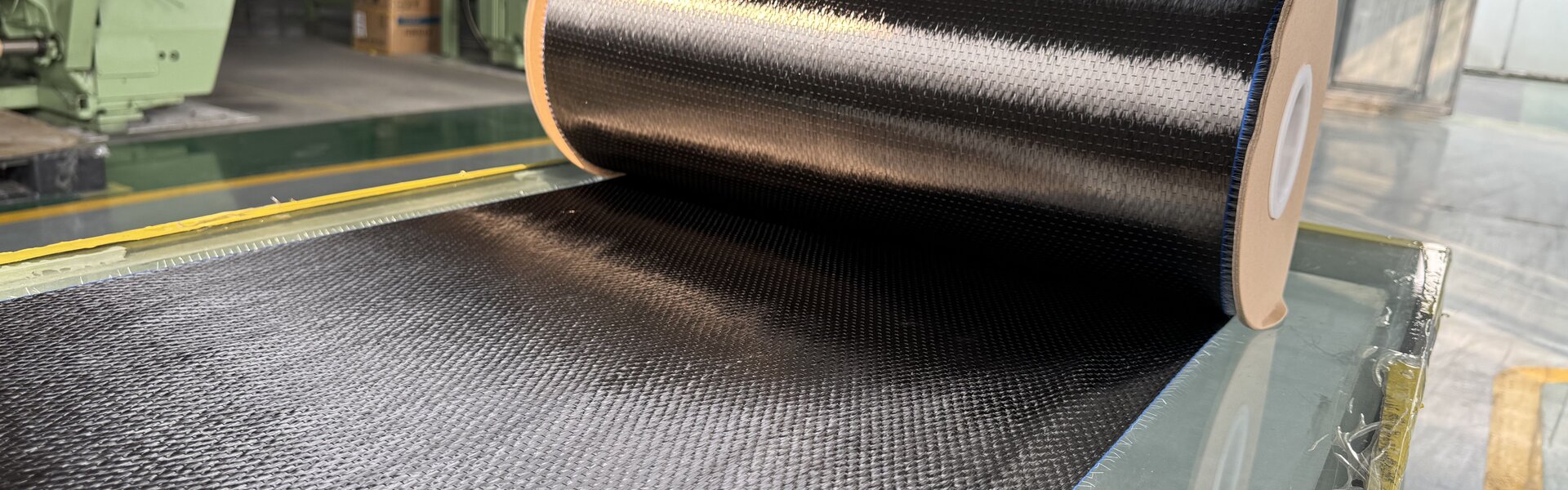
Carbon fiber is one of the most remarkable materials in modern structural engineering. Pound for pound, it offers roughly ten times the tensile strength of steel at a fraction of the weight. But not all carbon fiber is the same. The raw material comes in a wide range of grades determined by two fundamental parameters: tow size (the number of individual filaments bundled together) and strength/modulus classification (how strong and how stiff the fiber is).
For engineers specifying carbon fiber reinforced polymer (CFRP) systems for building and infrastructure strengthening, understanding these classifications is critical. Choosing the wrong grade can mean overpaying for aerospace performance the structure does not need, or specifying fiber that cannot deliver the required capacity. This article explains carbon fiber raw material types and recommends the best grades for construction strengthening.
What is a Carbon Fiber Tow?
Carbon fiber is produced as bundles of thousands of individual filaments, each filament only 5–10 µm in diameter — thinner than a human hair. These bundles are called tows. The "K" number denotes how many filaments a tow contains:
- 1K (1,000 filaments) — Very fine tow, used for high-end aerospace, sporting goods (fishing rods, bicycle frames), and decorative weaves where surface finish matters.
- 3K (3,000 filaments) — Common for woven fabrics in consumer products, automotive, and decorative applications. Produces a classic, tight weave appearance.
- 6K (6,000 filaments) — Mid-range tow used in some industrial fabrics and prepreg systems.
- 12K (12,000 filaments) — The standard tow size for structural CFRP in construction. Offers the best balance of strength, fabric weight, and cost. Most unidirectional fabrics for concrete and steel strengthening are made from 12K tow.
- 24K (24,000 filaments) — Larger tow used in pultruded carbon fiber plates, rebars, and some heavy industrial fabrics.
- 50K and above — "Large tow" carbon fiber, often used in wind turbine blades, automotive parts, and non-structural applications where cost sensitivity is high.
In general, lower K numbers produce finer, more uniform fabrics that are easier to wet out with resin but significantly more expensive per kilogram. Higher K numbers reduce manufacturing cost but produce stiffer, thicker fabrics that can be more challenging to saturate thoroughly.
Strength & Modulus Grades: T-Series and M-Series
Beyond tow size, carbon fibers are classified by tensile strength (load capacity before failure) and tensile modulus (stiffness). These properties are determined by the precursor material (typically PAN, polyacrylonitrile) and the heat treatment temperature during production. The industry standard designations were originally developed by Toray and are now adopted worldwide:
Standard Modulus (SM) — ~230 GPa
- T300 — The original standard-grade fiber. Tensile strength ~3.5 GPa, modulus ~230 GPa, ultimate elongation ~1.5%. Used in aerospace and construction since the 1970s. Still the most widely used grade for structural strengthening fabrics worldwide.
- Most "standard modulus" carbon fiber fabrics on the construction market use fiber equivalent to T300 grade. It offers reliable, predictable performance at a reasonable cost.
Intermediate Modulus (IM) — ~240–300 GPa
- T700 — Higher strength than T300 (~4.9 GPa) with similar modulus (~230 GPa) but better filament quality and tighter property tolerances. Increasingly specified for construction CFRP systems.
- T800 — Intermediate modulus (~294 GPa) with very high strength (~5.9 GPa). Used in advanced aerospace (Boeing 787, Airbus A350) and demanding structural applications requiring both high strength and high stiffness.
- T1000 — Ultra-high strength (~6.3 GPa). Among the strongest commercially available PAN-based carbon fibers, used for premium applications.
High Modulus (HM) — ~340–450+ GPa
- M40, M46, M55, M60 — High-modulus fibers where stiffness (modulus) is significantly higher than standard grades. These fibers are stiffer but typically have lower tensile strength and lower elongation at break (<1%), making them more brittle.
- Primarily used in space structures, precision instruments, and applications where stiffness dominates. Rarely used in building strengthening because low elongation creates anchorage and debonding challenges.
Which Grade is Used for Structural Strengthening?
For the vast majority of concrete, steel, masonry, and timber strengthening projects, the carbon fiber of choice is standard modulus (T300-grade) or intermediate modulus (T700-class) fiber in a 12K tow format. Here is why:
Strength-to-cost ratio. T300-grade 12K unidirectional fabric offers a tensile strength of 3,400–3,800 MPa at a fraction of the cost of aerospace-grade T800 or M-series fibers. The extra strength of higher grades is rarely needed in building strengthening because the concrete or masonry substrate typically governs the design — not the fiber capacity.
Elongation compatibility. Standard modulus carbon fiber elongates approximately 1.5–1.7% at break, which is well matched to the working strain range of concrete and steel structures. Higher modulus fibers have elongation below 1%, which can lead to premature debonding before the CFRP develops its full capacity.
Fabric handleability. 12K tows produce a fabric that is thick enough for efficient installation (typically 200–600 g/m²) while remaining flexible enough to wrap around columns, beams, and irregular surfaces. 3K and 1K fabrics are too lightweight and expensive for most structural work.
Proven track record. T300 and T700-grade carbon fiber fabrics have been used in structural strengthening for over 30 years, with thousands of research papers and major design codes (ACI 440, fib Bulletin 14, and China's GB 50728) based on their properties.
Large-Tow and Industrial Grade Carbon Fiber
In recent years, 24K and 50K large-tow carbon fibers have become more common in industrial applications:
- 24K woven fabrics are sometimes used for shear strengthening or column wrapping where heavier fabric weights (600–1,000 g/m²) are acceptable. They are stiffer and require more effort to impregnate with epoxy.
- Pultruded carbon fiber plates for flexural beam and slab strengthening commonly use 24K or multiple 12K tows aligned unidirectionally. The pultrusion process achieves excellent fiber alignment and high fiber volume fraction.
- 50K "industrial grade" fiber is rarely used in bonded structural systems because the thick tows create resin-rich zones and poor wet-out in fabric form.
Practical Selection Guide
For most building and infrastructure strengthening projects, standard modulus 12K carbon fiber fabric (T300-grade equivalent) is the most cost-effective and structurally appropriate choice. Typical design values are a fiber tensile strength of 3,400–3,800 MPa and a modulus of 230–240 GPa, with a cured laminate thickness of approximately 0.11–0.17 mm per ply (depending on fabric weight).
Where higher performance is warranted — for seismic retrofit with large anticipated strains, or for strengthening members with very high load demands — upgrading to a T700-class intermediate-modulus fiber provides additional safety margin without the cost premium of true aerospace-grade materials.
Aerospace grades (T800, T1000, M-series) are generally unnecessary for structural strengthening. Their premium cost, lower elongation, and specialized handling requirements offer no practical advantage when the substrate (concrete, masonry) is the weakest link in the system.
Understanding these raw material differences helps engineers specify the right CFRP system for each project — avoiding both under-design and unnecessary over-specification.