
In sintesi
- Resistenza vs. rigidità: le barre in fibra di vetro FidStrong risultano pari a 950 MPa a trazione — oltre l'intervallo 483–690 MPa indicato da ACI 440.1R-15 per l'acciaio — ma il loro modulo elastico è di soli 47 GPa contro i 200 GPa dell'acciaio, per cui di norma è la deformazione, non la resistenza, a governare il progetto.
- La corrosione è il vero motivo per passare al GFRP: il GFRP è immune alla corrosione elettrochimica che distrugge l'acciaio in ambienti marini, esposti a sali disgelanti e ad aggressione chimica.
- I compromessi: il GFRP è lineare-elastico fino a una rottura fragile, non può essere piegato in cantiere e richiede sezioni più ampie e un'armatura minima di circa 1.64× quella richiesta — ora disciplinata da una normativa obbligatoria, la ACI 440.11-22.
Scegliere le barre GFRP quando è la corrosione — non il carico — a limitare la vita utile di una struttura, e l'acciaio quando rigidità, duttilità e costo dominano in un ambiente non aggressivo. Questa singola frase risolve la maggior parte delle decisioni reali. Il resto di questa guida la quantifica, con ogni dato riconducibile ad ACI 440.1R-15 o ai dati di prova delle barre FidStrong — nessun numero inventato.
Le barre GFRP sono davvero più resistenti dell'acciaio?
In termini di pura resistenza a trazione, sì — ma la resistenza è raramente la proprietà che determina un progetto. Le barre in fibra di vetro FidStrong (la nervata FSGR e la liscia FSGS) risultano pari a 950 MPa secondo ASTM D7205, mentre la Tabella 4.2.1 di ACI 440.1R-15 colloca le comuni barre in acciaio a 483–690 MPa.
Il limite sta nella rigidità. Il modulo elastico del GFRP è di circa 47 GPa — grosso modo un quarto dei 200 GPa dell'acciaio. Un elemento armato con GFRP quindi si deforma e si fessura molto di più di uno in acciaio a parità di carico, per cui sono gli stati limite di esercizio, non la resistenza ultima, a governare la sezione. Il GFRP è inoltre lineare-elastico fino a una rottura fragile improvvisa: non esiste alcun plateau di snervamento né alcun preavviso duttile prima del collasso, il che ridisegna tutta la filosofia progettuale illustrata di seguito.
| Proprietà | Barra in acciaio | Barra GFRP (FSGR / FSGS) |
|---|---|---|
| Resistenza a trazione | 483–690 MPa | 950 MPa |
| Modulo elastico | 200 GPa | 47 GPa (≈¼) |
| Modalità di rottura | Snervamento duttile, allungamento 6–12% | Fragile, allungamento ~2.1%, senza snervamento |
| Densità | 7.90 g/cm³ | 2.10 g/cm³ (≈¼ del peso) |
| Dilatazione termica (long.) | 11.7 ×10⁻⁶/°C | 6.0–10.0 ×10⁻⁶/°C |
| Corrosione elettrochimica | Corrode (cloruri, carbonatazione) | Immune |
| Piegatura in cantiere | Sì | No — solo preformata in fabbrica |
Intervalli per acciaio e FRP comparativi: ACI 440.1R-15, Tabelle 4.1.1, 4.1.2, 4.2.1. Valori GFRP: dati di prodotto FidStrong FSGR/FSGS (ASTM D7205 / D7957).
Perché le barre GFRP non corrodono — e qual è il limite?
Il GFRP non corrode per via elettrochimica, il che è il suo vantaggio principale — ma “a prova di corrosione” è una semplificazione che vale la pena approfondire. L'acciaio annegato nel calcestruzzo si ossida quando i cloruri (acqua di mare, sali disgelanti) o la carbonatazione degradano il suo strato passivante protettivo; la ruggine, espandendosi, fessura e provoca il distacco del copriferro. Il GFRP non ha alcun metallo da ossidare, per cui questo meccanismo semplicemente non esiste.
La sfumatura: ACI 440.1R-15 §5.2.1 rileva che la fibra di vetro nuda, in acqua interstiziale ad alto pH (pH 11.5–13), può perdere fino al 75% della propria resistenza. È la matrice resinosa — vinilestere nella barra FidStrong — a proteggere la fibra dall'attacco alcalino in servizio. Ecco perché il fattore di riduzione ambientale CE per il GFRP è più severo, 0.7–0.8 (ACI 440.1R-15 Tabella 6.2), rispetto a quello della fibra di carbonio. Per approfondire come i compositi invecchiano sotto l'effetto di umidità, alcalinità e raggi UV, vedi la nostra guida sulla durabilità del rinforzo FRP.
In che modo le barre GFRP cambiano il progetto?
Aspettatevi sezioni più ampie e più barre: la bassa rigidità del GFRP sposta il progetto da un controllo a resistenza a un controllo a deformazione. Poiché una rottura fragile dell'FRP non dà alcun preavviso, i progettisti sovra-armano deliberatamente in modo che sia lo schiacciamento del calcestruzzo a governare il collasso — il rapporto di armatura bilanciato a f′c = 34.5 MPa è di appena 0.0078 per il GFRP contro 0.0335 per l'acciaio (ACI 440.1R-15 Tabella 7.2.1).
Ne derivano due conseguenze per chi specifica il GFRP. Il fattore di riduzione della resistenza è φ = 0.55 per le sezioni a controllo di trazione (§7.2.3) — l'inverso delle priorità dell'acciaio — e gli spessori minimi degli elementi aumentano (ad esempio, ℓ/13 per una soletta monodirezionale semplicemente appoggiata, Tabella 7.3.2.1), con un'armatura minima pari a circa 1.64× il valore per l'acciaio (§7.2.4). Interpretare correttamente queste resistenze caratteristiche e i fattori CE è importante; la nostra guida su come leggere una scheda tecnica FRP si applica direttamente anche alle barre.
Quando conviene scegliere invece l'acciaio — o le barre CFRP?
Restare sull'acciaio quando l'ambiente non è aggressivo e sono la rigidità o la duttilità a guidare il progetto; passare al CFRP quando serve l'immunità alla corrosione dell'FRP ma non ci si può permettere la flessibilità del GFRP. L'acciaio vince per modulo elastico (200 GPa), preavviso di collasso duttile, piegabilità in cantiere e costo per tonnellata all'interno di un calcestruzzo asciutto o ben protetto.
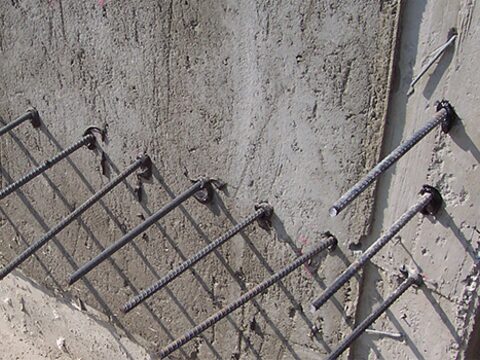
Dove la corrosione esclude l'acciaio ma la deformazione deve restare contenuta, la barra in fibra di carbonio (CFRP) offre un modulo molto più elevato del vetro, mantenendo i vantaggi di non corrosività e non magneticità. Entrambe le barre possono essere ancorate nel calcestruzzo esistente con un sistema di ancoraggio per barre epossidico o vinilestere — e gli stessi compromessi di chimica resinosa trattati nella nostra guida alla scelta dell'adesivo per ancoraggio chimico si applicano anche a questo collegamento.
Le barre GFRP sono approvate da una normativa?
Sì — e con la ACI 440.11-22 è passata da guida indicativa a normativa edilizia obbligatoria. La ACI CODE-440.11-22 è il primo standard di ACI in linguaggio normativo per il calcestruzzo armato con GFRP, strutturato per allinearsi ai capitoli di ACI 318 già utilizzati dagli ingegneri, superando lo status puramente indicativo della ACI 440.1R-15.
In Europa, prEN 1992-1-1 Allegato JA stabilisce per il GFRP un fattore di sicurezza parziale γFRP = 1.50 e una resistenza a trazione caratteristica minima a 100 anni fftk,100a ≥ 300 MPa. Per capire come le normative FRP americane ed europee divergano nella filosofia, vedi il nostro confronto tra ACI 440 e fib Bulletin 14.
Domande frequenti
Le barre GFRP sono resistenti quanto quelle in acciaio?
In termini di resistenza a trazione, sì: la barra GFRP FidStrong risulta pari a 950 MPa (ASTM D7205/D7957), oltre l'intervallo 483–690 MPa tabulato da ACI 440.1R-15 per l'acciaio. Ma il modulo del GFRP è di soli 47 GPa contro i 200 GPa dell'acciaio (Tabella 4.2.1), per cui di norma sono la deformazione e l'ampiezza delle fessure — non la resistenza — a governare il progetto.
Le barre GFRP possono essere piegate in cantiere come l'acciaio?
No. Il GFRP è un composito lineare-elastico; la piegatura in cantiere rompe le fibre e annulla la resistenza di progetto. ACI 440.5-08 richiede piegature preformate in fabbrica, e prEN 1992-1-1 Allegato JA vieta esplicitamente la piegatura in cantiere, fissando i diametri minimi di piegatura a 4Φ (barre ≤16 mm) e 7Φ (>16 mm).
Le barre GFRP davvero non corrodono mai?
Come armatura annegata è immune alla corrosione elettrochimica — cloruri, carbonatazione, sali disgelanti — che attacca l'acciaio. Un'avvertenza: ACI 440.1R-15 §5.2.1 rileva che la fibra di vetro nuda può perdere fino al 75% della propria resistenza in acqua interstiziale ad alto pH, per cui è la matrice resinosa a proteggere la fibra, non un'immunità chimica letterale del vetro stesso.
Quanta sezione di calcestruzzo in più serve con il GFRP rispetto all'acciaio?
Di più. Il modulo del GFRP è grosso modo un quarto di quello dell'acciaio, quindi ACI 440.1R-15 richiede spessori minimi degli elementi maggiori (ad esempio, ℓ/13 per una soletta monodirezionale semplicemente appoggiata, Tabella 7.3.2.1) e un'armatura minima pari a circa 1.64× l'equivalente in acciaio (§7.2.4) per controllare la deformazione e l'ampiezza delle fessure.
Esiste già una normativa edilizia obbligatoria per le barre GFRP?
Sì. La ACI CODE-440.11-22 è la prima normativa edilizia obbligatoria, in linguaggio normativo, di ACI per il calcestruzzo armato con GFRP, allineata per capitoli ad ACI 318 — una pietra miliare di conformità rispetto alla precedente guida progettuale puramente indicativa ACI 440.1R-15.
Dove ha più senso il GFRP rispetto all'acciaio?
Ovunque sia la corrosione, non la resistenza grezza, a limitare la vita utile: banchine e moli marittimi, impalcati di ponti esposti ai sali disgelanti, impianti chimici e di trattamento acque reflue, e strutture elettromagneticamente sensibili — sale RM, cabine elettriche, fondazioni di impianti radar — dove è richiesto anche il comportamento non conduttivo e non magnetico del GFRP.
FidStrong produce barre in fibra di vetro FSGR e FSGS testate secondo ASTM D7205/D7957 nell'ambito dei sistemi di qualità ISO 9001, 14001 e 45001, e fornisce gli adesivi di ancoraggio epossidici e vinilestere citati sopra. I valori di progetto qui riportati sono tratti da ACI 440.1R-15, ACI 440.11-22 e prEN 1992-1-1 Allegato JA; verificare i valori specifici del progetto rispetto alla normativa vigente e alla scheda tecnica del prodotto.