
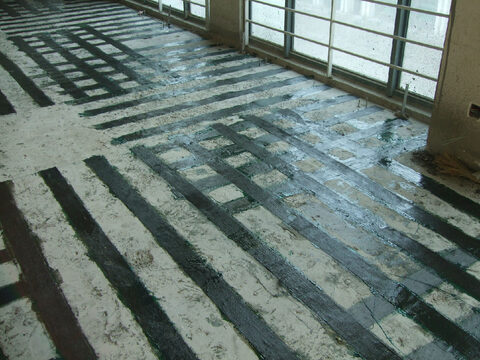
Carbon fiber gets the attention, but in a bonded strengthening system the epoxy does the unseen work: it transfers stress from the structure into the fiber. If the adhesive fails, the fiber strength is irrelevant. Understanding the different epoxies — and respecting how they are mixed and applied — is essential to a durable installation.
The three jobs epoxy does
A typical CFRP system uses up to three distinct epoxy products, each formulated for a purpose. The primer is low in viscosity so it soaks into the concrete pores and creates the bond foundation. The impregnating (saturating) resin wets out fabric in wet-layup work, fills the weave, and bonds the sheet to the primed surface. The plate bonding adhesive is a thick, thixotropic paste that holds pre-cured laminate strips to the substrate without sagging or running. A related thixotropic epoxy putty is used to level the surface before fabric is applied.
Why they are not interchangeable
The viscosity and thixotropy of each product are tuned to its task. Use a runny saturating resin to bond a plate and it will sag and starve the joint; use a thick plate adhesive to wet out fabric and it will never penetrate the weave. The products are also tested and certified as a system: the fiber’s published design values assume the matching resin. Substituting a component from another manufacturer voids that tested performance.
Mixing and pot life
Structural epoxies are two-part (resin and hardener) and are extremely sensitive to ratio. Always mix the full, pre-measured units at the specified ratio — do not split kits by eye — and mix thoroughly until the colour is uniform, scraping the sides of the container. Once mixed, the epoxy has a limited pot life before it begins to gel; beyond it, the material will not bond properly even if it still looks workable. Mix only what you can place within that window.
Temperature and moisture
Cure speed and pot life depend strongly on temperature. In hot weather the epoxy gels faster, shortening working time; in cold weather it cures slowly and may not reach full strength — most systems specify a minimum substrate temperature. The substrate should be above the dew point and free of standing water unless the product is specifically a moisture-tolerant grade. Follow the technical data sheet for the allowable temperature window.
Health and handling
Uncured epoxy resins and hardeners are irritants and sensitizers. Wear gloves and eye protection, ensure ventilation, and follow the safety data sheet. Cured epoxy is inert, but the mixing and application stage requires proper precautions.
Treat the adhesive as the engineered heart of the system, not a generic glue, and the carbon fiber will deliver the strength it was designed for.