
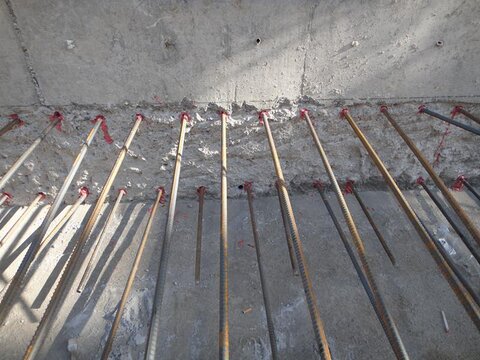
At a glance
- No published cost comparison exists for CFRP vs. steel-plate vs. section enlargement in the design literature — so an honest whole-life case is built on sourced technical attributes, not invented dollar figures.
- Weight and durability are the real drivers: CFRP is ~1/5 the density of steel (1.5–1.6 vs 7.9 g/cm³) and retains ~90% of its strength under 50-year sustained load, versus ~30% for glass fibre.
- Downtime is where the lifecycle math often turns: precured CFRP plate installs with minimal downtime; wet-layup fabric needs ~7 days’ cure before load.
The lowest-quoted strengthening method is rarely the cheapest over a structure’s life — weight, durability, maintenance, and downtime dominate the total — but you have to reason about those honestly, because no standard published cost comparison exists in the technical literature. This article frames CFRP’s whole-life case through attributes that are sourced, and says plainly where a number would be invention. For the underlying aging behaviour, see durability of CFRP strengthening.
Why “whole-life cost” is the right lens — and its honest limit
Upfront material price is a fraction of lifetime cost. Added self-weight can force foundation work; a method that corrodes needs recoating; a slow install closes a facility or lane for longer. Those recurring and knock-on costs usually outweigh the sticker difference. The honest limit: the design literature carries no monetary, per-unit, or ROI figures for CFRP, bonded steel plate, or section enlargement — and section enlargement has essentially no documented technical coverage at all. So this analysis compares the sourced physical attributes that drive cost, and flags anything unquantified rather than inventing a number.
Does CFRP need crane work or foundation upgrades?
No — and this is its clearest lifecycle advantage. CFRP’s density is 1.5–1.6 g/cm³ against structural steel’s 7.9 g/cm³ (ACI 440.2R Table 4.2.1) — roughly one-fifth the weight for an equivalent strengthening system, so it adds negligible dead load, needs no crane or heavy rigging, and does not trigger a foundation check. It is also thin: FidStrong plate is 1.2–3.0 mm and a fabric ply just 0.111–0.333 mm, so there is no loss of clearance or usable space — the basis for the bridge-industry point that externally bonded FRP “does not change under-clearance,” unlike a steel plate or a thicker section.
How long does it last?
Durability is where CFRP earns its lifecycle keep, and the numbers are sourced. Its 50-year creep-rupture ratio is about 0.90, versus ~0.50 for aramid and ~0.30 for glass (ACI 440.2R Sec. 4.4.1) — carbon holds its strength under sustained load far better over decades. Its environmental reduction factor stays at 0.85 even in aggressive (chemical, wastewater) exposure, where glass falls to 0.50 (Table 9.4), and bare carbon resists both alkaline and acidic environments. Field evidence backs the lab data: Florida DOT has used externally bonded CFRP to repair bridges for 20+ years.
| Lifecycle attribute (sourced) | Carbon FRP | Glass FRP |
|---|---|---|
| 50-yr creep-rupture ratio | ~0.90 | ~0.30 |
| Sustained + cyclic stress limit | 0.55 ffu | 0.20 ffu |
| CE, aggressive exposure | 0.85 | 0.50 |
| Density (g/cm³) | 1.5–1.6 | — |
Will it need repainting like a steel plate?
CFRP does not corrode, so it carries none of a steel plate’s periodic recoating burden — that is the durability logic, and CFRP’s non-corroding nature and 0.85 aggressive-exposure factor are sourced. In fairness, the specific claim that a bonded steel plate needs periodic repainting is general engineering knowledge rather than a figure the design literature quantifies, so treat the maintenance comparison as directional, not numeric. One genuine CFRP caveat belongs in the lifecycle picture: carbon is electrically conductive and must not directly contact steel, or a galvanic couple can form — a detailing rule, not a maintenance cost, but one to get right at installation.
Where does downtime tip the balance?
Often, decisively. Precured CFRP plate is documented as a minimal-downtime installation; wet-layup carbon fabric needs a full cure of about 7 days at 20°C before it can be loaded. On a bridge, externally bonded FRP installs without interrupting traffic and without changing under-clearance, unlike demolition-and-rebuild or steel plating. For a live production line or a trafficked structure, the cost of days of closure can dwarf the material difference — which is exactly why the plate-versus-fabric choice is a lifecycle decision, not just a material one (see plate vs. fabric).
What about the built-in safety over the structure’s life?
CFRP strengthening carries a whole-life risk safeguard in the code itself. ACI 440.2R’s strengthening limit (Eq. 9.2) requires the unstrengthened structure to independently carry 1.1×dead + 0.75×live even if the FRP is ever lost or degrades. So the added capacity sits on top of a structure engineered to stand without it — a designed-in resilience that protects the asset over its life, not just at handover. For the fundamentals, see what CFRP strengthening is.
FAQ
Is CFRP strengthening cheaper than steel plating or rebuilding over the structure’s life?
Honestly, the technical literature has no monetary cost, per-unit, or payback data for CFRP, bonded steel plate, or section enlargement — a dollar comparison would be invented. What is sourced and decisive: CFRP is ~1/5 the weight of steel, retains ~90% of its strength over a 50-year sustained-load horizon versus ~30% for glass, and (as precured plate) installs with minimal downtime. Those attributes are the honest basis for a whole-life case; a project cost study turns them into money.
Does CFRP add weight I need to check my foundations for?
No. CFRP density is 1.5–1.6 g/cm³ versus steel’s 7.9 (ACI 440.2R Table 4.2.1) — about one-fifth — so it adds negligible dead load, needs no crane, and does not trigger a foundation upgrade. It is also millimetre-thin, so it does not reduce clearance.
How long will a CFRP system last before it needs attention?
The sourced proxy is its 50-year creep-rupture ratio of ~0.90 (retaining ~90% of strength under sustained load, versus ~30% for glass), plus 20+ years of field service on Florida DOT bridges. There is no wiki-sourced “years to first maintenance” figure for CFRP or a bonded steel plate, so treat these as durability indicators, not a warranty.
Will I have to maintain CFRP the way I would a steel plate?
CFRP does not corrode, so it avoids a steel plate’s recoating burden, and its aggressive-exposure factor stays at 0.85. The specific “steel needs repainting” comparison is general engineering knowledge, not a quantified figure. One real rule: keep the conductive carbon from directly contacting steel to avoid a galvanic couple.
How much downtime does CFRP strengthening take?
It depends on the system: precured plate is a minimal-downtime install, while wet-layup fabric needs about 7 days’ cure at 20°C before loading. On bridges, externally bonded FRP does not interrupt traffic or change under-clearance — often the decisive lifecycle advantage over rebuilding or steel plating.
FidStrong manufactures CFRP plate and fabric for durable, low-downtime strengthening, under ISO 9001, 14001, and 45001 systems. The technical attributes here are from ACI 440.2R and FidStrong data sheets; no monetary cost comparison exists in the design literature, so any whole-life-cost decision should be closed out with a project-specific cost study and a qualified engineer.