
Get a Quote

Carbon Fiber Fabric for Concrete Strengthening

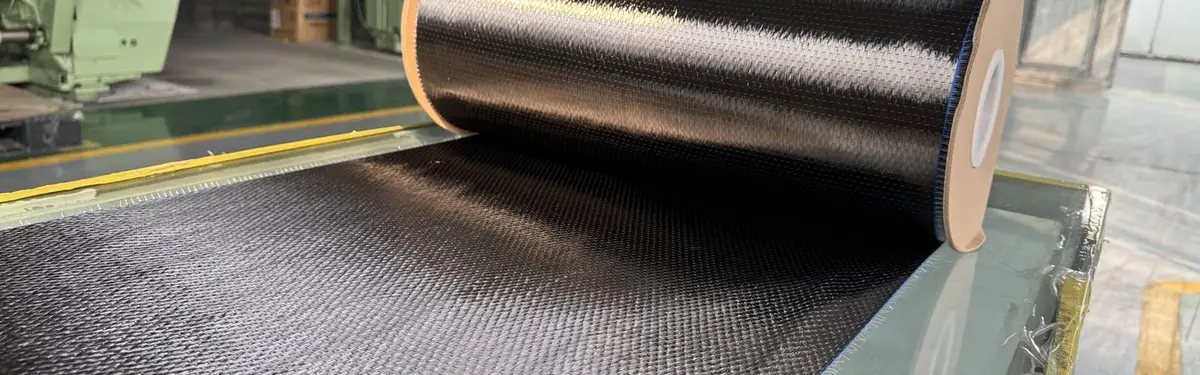
Unidirectional CFRP fabric, 200–600 g/m², in high-strength Grade A (4,400–4,500 MPa mean tensile, 235–240 GPa) or Grade C (3,500–3,800 MPa, 230 GPa). Eight models, each with its own TDS; tested per ASTM D3039, designed per ACI 440.2R.

Download TDS
20+ YearsStructural strengthening manufacturer
MTC + COABatch quality documents with every shipment
50+ Countries ServedExport-focused B2B supply
OEM & Private LabelYour brand, our factory →
FSC Carbon Fiber Fabric — Unidirectional CFRP fabric, 200–600 g/m², in high-strength Grade A (4,400–4,500 MPa mean tensile, 235–240 GPa) or Grade C (3,500–3,800 MPa, 230 GPa). Eight models, each with its own TDS; tested per ASTM D3039, designed per ACI 440.2R.

Specifications at a glance

FSC is a unidirectional (0°), PAN-based carbon fiber fabric (also sold as carbon fiber wrap or CFRP sheet) for externally bonded strengthening of concrete, masonry and timber. Wet-laid with FSE 302 primer and FSE 322 saturant it forms a CFRP laminate. The values below are mean laminate values on a net-fiber-area basis (ASTM D3039); design with the characteristic values (mean − 3σ) given in the table and in each TDS.

PropertyValue
Fiber TypeCarbon fiber, PAN-based, Unidirectional (0°)
Available Weights200 / 230 / 300 / 600 g/m²
Available GradesGrade A (high strength, 4,400–4,500 MPa) / Grade C (economy, 3,500–3,800 MPa); Grade B (3,800 MPa) to order
Available Widths100 / 150 / 200 / 250 / 300 / 500 / 600 mm
Roll Length100 m standard; 50 m for 600 g/m²
Testing StandardASTM D3039 (≥ 25 specimens); Design per ACI 440.2R

Mechanical Properties by Model

ModelWeightg/m²Thicknessmm, nominal, net fiberTensile StrengthMPa, meanElastic ModulusGPa, meanElongation%, meanCharacteristic StrengthMPa, mean − 3σTDS
FSC200A2000.1114,5002401.84,000PDF
FSC200C2000.1113,5002301.73,200PDF
FSC230A2300.1284,5002401.84,000PDF
FSC230C2300.1283,5002301.73,200PDF
FSC300A3000.1674,5002401.84,000PDF
FSC300C3000.1673,5002301.73,200PDF
FSC600A6000.3334,4002351.83,800PDF
FSC600C6000.3333,8002301.73,300PDF

Where It Is Used

Flexural strengthening of beams & slabs

Bonded to the tension face when loads increase (change of use, new equipment) or when reinforcement has corroded.

Shear strengthening of beams

U-wraps or side bonding where the stirrups are insufficient, a common finding in older frames.

Column confinement

Full hoop wrapping raises axial capacity and ductility; the standard fix for seismic retrofit and overloaded columns.

How to Calculate Carbon Fiber Layers for Column Confinement →

New openings in slabs & walls

Strengthen the cut edges before cutting openings for lift shafts, stairwells or MEP penetrations.

Restoring corrosion-damaged members

After patch repair, wrapping restores the lost capacity of the section and slows re-cracking.

Selection Guide

WeightTypical useTrade-off
200 / 230 g/m²Flexural and shear strengthening of beams and slabs, usually 1–2 layersThin, easy to wet out
300 g/m²When the design asks for more capacity per layerSlightly more resin per layer than 200 / 230; otherwise the everyday workhorse
600 g/m²Large areas, less labor per m²More saturant per layer, and stricter rolling or you trap air
GradeFiberWhen to choose it
Grade AHigh-strength grade · 4,400–4,500 MPa / 235–240 GPaWhen the design needs the higher characteristic strength (3,800–4,000 MPa) or fewer layers, or the tender specifies a fiber tensile strength of 4,400 MPa or more
Grade C3,500 MPa (600 g/m²: 3,800 MPa) / 230 GPaGeneral repair work where the design allows it and a characteristic strength of 3,200–3,300 MPa is enough — saves budget

Both grades are woven the same way and handle the same on site; the difference is the fiber inside. Rolls come 100–600 mm wide and 100 m long (50 m for the 600 g/m² fabric) — matching the roll width to the member (200 mm strips for a beam soffit, say) saves cutting on site.

Values are mean laminate test values on a net-fiber-area basis (ASTM D3039). For design, use the characteristic values (mean − 3σ) in each TDS and apply the environmental reduction factor per ACI 440.2R or your local code.

Selected Projects

2021–2023 · Pakistan
Underside of a concrete bridge deckPhoto for illustration

Bridge repair and strengthening, Islamabad

Tendered municipal project

Maintenance and repair of a major bridge in Pakistan's capital, awarded by public tender.

2,500 m²carbon fabric
1,078 mcarbon plate
4 tepoxy adhesives

The client audited our factory and reviewed our design calculations; we issued a 50-year service-life warranty letter.

2024 · Southeast Asia
Modern public building façadePhoto for illustration

Private-label supply to a Fortune 500 building-materials group

Civil and public building strengthening market

Carbon fiber fabric produced under the customer's own brand, sold into the civil and public building strengthening market.

25,000 m²single order
10,000 m² at 300 g/m² + 15,000 m² at 230 g/m²

Sold under their brand — volume supply inside an OEM program.

2025 · Thailand
Carbon fiber fabric being bonded to a beam soffit on site

18-story office refurbishment, Bangkok

Fabric and plate on one project

Structural upgrade of an 18-story office building in Bangkok.

18,000 m²fabric, 300 g/m²
4,000 mplate, 1.2 × 100 mm

Plate bonded to beam soffits for flexure, fabric wrapped around columns for confinement — the full fabric-and-plate method on one site.

Projects are shown anonymously: no client is named and order values are not published. Photos marked “Photo for illustration” are stock images of comparable structures, not our own sites.

Wet Lay-Up in Six Steps

  1. Prepare the surface

    Grind or blast back to sound concrete and remove laitance, dust and oil — the substrate needs a pull-off strength of at least 1.5 MPa and a moisture content of 4 % or less. Round external corners to a radius of at least 20 mm, and repair badly damaged sections first.

  2. Level

    Fill voids and steps deeper than 0.5 mm so the fabric lies flat — every bump becomes an air pocket. Let the leveling adhesive cure before priming.

  3. Prime

    Roll on a thin coat of epoxy primer to seal the substrate and anchor the system to the concrete; carry on once it has reached a tacky state.

  4. Apply the first coat

    Spread the impregnating epoxy — FSE 322, the saturant — evenly over the primed area.

  5. Lay the fabric

    Roll it out along the fiber direction, then work the air out with a ribbed roller until resin strikes through the weave. Lap joints run along the fiber direction and are at least 100 mm long.

  6. Apply the second coat

    Wet out fully. Work between 5 and 35 °C; full cure takes 7 days at 20 °C. Broadcast sand into the wet resin, or add a protective coating, where a plaster finish or fire protection is required — and UV protection is mandatory for exterior work.

Quality check: after cure, verify by pull-off test or hammer sounding to your project specification. Mixing ratios, pot life and cure windows are in each epoxy's TDS — follow the numbers there, not habit.
Carbon fiber weaving looms in the production hall
Carbon fiber creel and coating production line
Carbon fiber specimen failing in tension on a universal testing machine

Made in China: the fabric is woven and tested at our production base in Shandong Province, and orders and shipping are handled by our export office in Shanghai. Factory audits are welcome.

Frequently Asked Questions

What is the difference between Grade A and Grade C?

The fiber. Grade A is the high-strength grade (4,400–4,500 MPa / 235–240 GPa, mean values on a net-fiber basis), Grade C is 3,500 MPa (3,800 MPa for 600 g/m²) / 230 GPa. Take A when the design needs the higher characteristic strength (3,800–4,000 MPa) or fewer layers, or when the tender specifies a fiber strength of 4,400 MPa or more; take C for general repair work where the design allows it. A Grade B (3,800 MPa) sits between the two and is supplied to order. We grade by tested laminate performance, not by a fiber trade name — the TDS gives the mean and characteristic values for each model.

Which weight should I order?

Follow your strengthening design; the difference between weights is how much fiber one layer carries. Per layer (mean, net-fiber basis, from the TDS): 200 g/m² Grade A = 0.111 mm and 499 kN/m; 230 g/m² = 0.128 mm and 576 kN/m; 300 g/m² = 0.167 mm and 752 kN/m; 600 g/m² = 0.333 mm and 1,465 kN/m. So 300 g/m² carries about 50 % more per layer than 200 g/m² with the same fiber — fewer layers for the same design force. Use 200 / 230 g/m² when one thin, easy-to-wet layer is enough (typical beam and slab work), 300 g/m² when the design asks for more capacity per layer, and 600 g/m² for large areas where labor costs more than resin.

How much does carbon fiber fabric cost per m²?

It depends on weight, grade and quantity — a 600 g/m² Grade A roll and a 200 g/m² Grade C roll are very different products. Send us the model and the quantity and you will have a quote the same day; fabric is priced by the roll (100 m standard, 50 m for 600 g/m²).

What is the minimum order and the lead time?

The minimum order is low: fabric from one roll (100 m standard, 50 m for 600 g/m²; a 500 mm × 100 m roll is 50 m²), adhesives from 30 kg. Standard products ship 3–5 days after order.

Do you do OEM / private label?

Yes — it is our main business. Your brand on the roll label, the cartons and the TDS. See our OEM service.

Which adhesives go with the fabric?

Primer Epoxy (FSE 302), Repair & Leveling Adhesive (FSE 502) for surface preparation, and Impregnating Epoxy (FSE 322) as the saturant. Ordering fabric and epoxy together keeps the system consistent and ships in one container.

What documents come with a shipment?

The TDS for each model, the carbon fiber test report, and the MTC and COA for the batch.

How should the fabric be stored?

Dry fabric contains no resin, so there is no shelf-life limit: keep the rolls clean, dry and out of prolonged UV and they store long term. The epoxies are the time-sensitive part — check their TDS.

Can I get a sample before ordering?

Yes — cut fabric samples are free on request, and if your lab wants to run its own tensile tests we can also supply ready-made ASTM D3039 test coupons. Send the model (or the two you are deciding between) and we will agree the piece size and shipping with you.

How does a small order ship?

Small orders can go by air freight — about a week to the Middle East. Full-container orders go by sea as usual. Tell us the destination country with your enquiry.

Unidirectional or bidirectional carbon fabric for column wrapping?

Unidirectional. FSC runs all of its fiber in one direction (0°), so when the fabric is wrapped around a column 100 % of the fiber works in the hoop direction — the direction the confinement pressure in ACI 440.2R (Chapter 12) is calculated from. A bidirectional 0°/90° fabric of the same weight puts only half of its fiber in the hoop direction, so you pay for fiber that does no confinement work. Bidirectional fabric or a carbon grid (see our Carbon Fiber Mesh for FRCM) is the choice where the load direction is uncertain or two-way action is needed, such as slab openings and masonry walls.

Request a Quote

Send the model (e.g. FSC300A), width and quantity — an engineer replies with the quote and the matching TDS within one working day.

Prefer not to fill in a form?