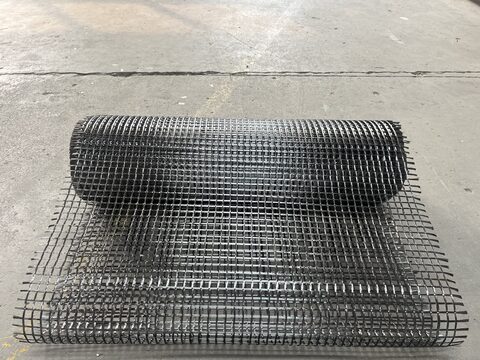
GFRP Rebar vs. Steel Rebar: When to Use Each in Concrete
Glass fiber rebar tests stronger than steel in tension but is four times less stiff and immune to corrosion. A source-backed guide to when GFRP beats steel — and when it does not.
Technical guides, comparisons, and field insight on carbon fiber structural strengthening.
Glass fiber rebar tests stronger than steel in tension but is four times less stiff and immune to corrosion. A source-backed guide to when GFRP beats steel — and when it does not.
Choosing an anchoring adhesive is about matching chemistry to substrate, temperature, hole condition, and load — and remembering the TDS table is yield-based, not a design load, and a wet hole doubles the cure time. Epoxy vs vinyl-ester, grounded in FSFIX data.
The epoxy’s glass-transition temperature sets the CFRP system’s ceiling: ACI caps service temperature at Tg − 15°C, and typical epoxy Tg is only 60–82°C. Why Tg matters, why HDT isn’t Tg, and how it’s verified.
Structural carbon fiber is PAN-based and graded by tested strength and modulus — not by a tow-brand label. The high-strength vs high-modulus trade-off, why a heavier fabric isn’t a stronger fiber, and why the fiber’s rated strength rarely governs the design.
FRCM binds fiber mesh in cement mortar; CFRP fabric saturates it in epoxy. That one difference decides fire, breathability, damp tolerance, and strength — and which one your job needs.
A CFRP data sheet is full of large numbers, and the wrong one wrecks a design. Mean vs characteristic, net-fiber vs laminate basis, the 5,800 MPa trap, and how a headline becomes a design value.
CFRP strengthening bonds high-strength carbon fiber to a structure so it carries more load — at a fifth the weight of steel. What it is, how it works, the three modes, and where it fits.
Plate for flat soffits and one-direction tension; fabric for wraps, curves and confinement. Why the honest comparison is stiffness, not strength — and when to use both together.
The FSE range is not one glue but five tools — primer, saturant, plate adhesive, crack injection, and anchoring. What each optimizes, and why substrate and temperature govern them all.
Blisters, delamination, and resin-starved laminate are preventable — and graded for accept/inject/cut-and-patch by objective code limits. How to tell the cause, detect it (pull-off >200 psi + substrate-mode), and repair by size. Per ACI 440.2R.
Externally bonded CFRP fails chiefly by debonding, so the substrate is everything. The targets — pull-off strength, profile, moisture, corners, cracks — and the pull-off test that proves the bond.
Almost every CFRP failure is a debonding failure, and almost every one traces to a handful of avoidable field mistakes — weak substrate, poor wet-out, cold joints, skipped QC. The dozen that matter.
A CFRP laminate is only as good as its cure. The temperature window (+5 to +35°C), the moisture and dew-point rules (<4%, ASTM D4263), pot life and 7-day full cure, and how the bond is verified — grounded in FidStrong data sheets and ACI 440.2R.
A step-by-step wet lay-up guide: prepare and test the substrate, prime, saturate and lay the fabric, cure and inspect — with the coverage rates, tolerances, and QC checks that decide whether it holds.
Ply count is not a lookup — it is an iteration bounded by two strain limits. The full ACI 440.2R Ch.12 chain (fℓ → f′cc), why you only use 55% of the fiber, how square columns differ, and a worked example.
A bonded laminate strains with the beam — but the bond, not the fiber, sets the ceiling. Strain compatibility, the debonding-strain cap, why more plies isn’t proportionally stronger, and what governs.
Two frameworks for the same job: ACI multiplies strength down with reduction factors, fib/Eurocode divide it by partial factors. Their origins, philosophies, and where they actually converge.
Externally bonded CFRP peels before it breaks. Anchorage holds it where bond alone would fail — when it’s required, which type wins, how much it adds, and why you can’t just bond it further.
Carbon is the most durable FRP fiber by a wide margin — higher environmental factors, far better creep resistance, chemically inert. How CFRP ages under environment, load, heat and UV, and how design accounts for it.
Fire is CFRP’s defining limit — and codes handle it by assuming the strengthening vanishes. Protect the FRP with insulation, or design the bare structure to survive without it. Both, ideally.
CFRP is well suited to salted, traffic-loaded parking decks — thin, non-corroding, ~40% flexural gain — but design turns on exposure (CE = 0.85), a 0.55 ffu fatigue cap, and the fact it strengthens bending, not punching shear. Per ACI 440.2R.
CFRP wraps make concrete columns ductile — confining the core, clamping lap splices, adding shear capacity — without adding the mass that raises earthquake demand. The mechanism, grounded in ACI 440.2R.
Soffit plates for flexure, web U-wraps for shear — but on a real girder the bond, exposure factors (CE = 0.85), and anchorage set the limit long before the fiber does. The practical design decisions, grounded in ACI 440.2R.
CFRP can raise a warehouse slab or beam’s flexural capacity by about 40% — thin, low-headroom, fast — but it strengthens bending, not punching shear, and the floor must still stand without it. What it can and cannot do, per ACI 440.2R.
For a listed façade the right system is usually FRCM — carbon or PBO mesh in a breathable mineral mortar, not epoxy CFRP. Why the matrix decides, what it achieves on walls, arches and vaults (3–5×), and the design limits, per ACI 549.6R-20.
A CFRP wrap restores a corrosion-damaged pile’s capacity and ductility — but it is a structural repair, not a corrosion cure. The confinement mechanics, marine design factors (CE = 0.85), the galvanic trap, and tidal-zone moisture limits, per ACI 440.2R.
Vetting a Chinese CFRP supplier is about the numbers behind the number: test method, specimen count, mean vs characteristic value, and whether a headline strength is a real design value or a dry-fibre marketing figure. A buyer’s checklist.
The lowest quote is rarely the cheapest over a structure’s life — weight, durability, maintenance, and downtime dominate. An honest whole-life case built on sourced technical attributes, stating plainly where no cost data exists.